
You want crystal clear water, not a green, murky mess. All right, you’ve seen the overwhelming options. Here’s the thing: a great filter-pump combo does the heavy lifting so you don’t have to. Obviously, you need a powerful multi-stage system that cycles your entire pond volume each hour. Let’s match you with the right setup so you can stop worrying and start enjoying your pond.
| 850GPH 4-Stage Pond Filter Pump and Filter Box | 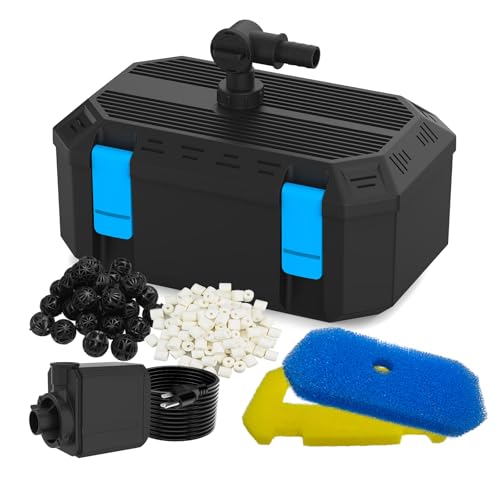 | All-in-One System | Flow Rate (GPH): 850 GPH | Pond Type/Capacity: 500-750 gallon pond | Filtration Stages/Type: 4-stage (sponge, ceramic, bio) | VIEW LATEST PRICE | Read Our Analysis |
| Anbull Bio Pressure Pond Filter 1060GPH |  | Best Pressure Filter | Flow Rate (GPH): 1060 GPH | Pond Type/Capacity: Ornamental under 1060 gal | Filtration Stages/Type: Multi-stage with sponges | VIEW LATEST PRICE | Read Our Analysis |
| Pond Filter Pump with Sponges Light and Spray Patterns |  | Most Powerful Pump | Flow Rate (GPH): 1370 GPH | Pond Type/Capacity: Up to 2113 gallons | Filtration Stages/Type: Multi-stage with sponges/stones | VIEW LATEST PRICE | Read Our Analysis |
| All-in-One Koi Pond Pump with 3 Spray Patterns | 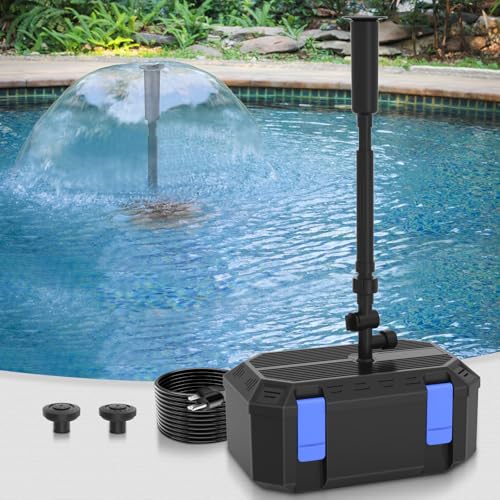 | Best Starter Kit | Flow Rate (GPH): 400 GPH | Pond Type/Capacity: 200-350 gallon pond | Filtration Stages/Type: 4-stage (sponge, ceramic, bio) | VIEW LATEST PRICE | Read Our Analysis |
| Aquascape UltraKlean Biological Pressure Filter with UV |  | Professional Grade | Flow Rate (GPH): 2700 GPH | Pond Type/Capacity: 2000 gallon pond | Filtration Stages/Type: Mechanical & biological | VIEW LATEST PRICE | Read Our Analysis |
| VIVOHOME Pressurized Pond Filter with Light 1580 GPH | 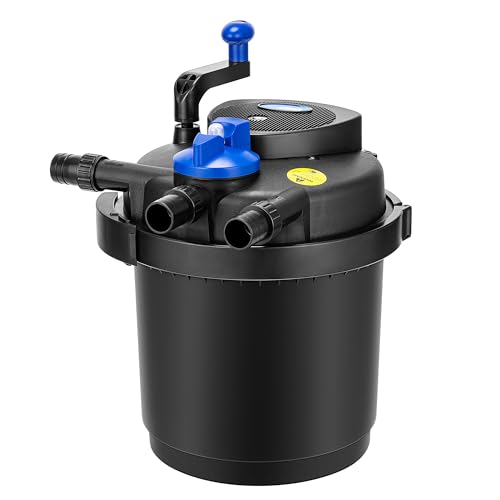 | Best with UV | Flow Rate (GPH): 1580 GPH | Pond Type/Capacity: Koi up to 800 gallons | Filtration Stages/Type: Bio-mechanical | VIEW LATEST PRICE | Read Our Analysis |
| Half Off Ponds Pressure Filter with UV for 4,000 Gallons |  | Largest Capacity | Flow Rate (GPH): 2000-4100 GPH range | Pond Type/Capacity: Up to 4000 gallons | Filtration Stages/Type: Multi-stage mechanical | VIEW LATEST PRICE | Read Our Analysis |
More Details on Our Top Picks
850GPH 4-Stage Pond Filter Pump and Filter Box
All right, if you’re tired of juggling separate pumps and filters, this VCRAZE unit solves that. It’s a dual-purpose 850GPH combo, obviously meant for ponds between 500 and 750 gallons. Its four-stage box handles everything: coarse and fine sponges, plus ceramic rings and bio-balls for bio-filtration. The integrated box protects your pump and fish while you clean the reusable media. Now, it only lifts water 9 feet, so check your waterfall height. Here’s the thing: this one’s for you if you want a simple, all-in-one mechanical and biological setup. Just connect your hose and you’re set.
- Flow Rate (GPH):850 GPH
- Pond Type/Capacity:500-750 gallon pond
- Filtration Stages/Type:4-stage (sponge, ceramic, bio)
- UV Clarifier:Not included
- Cleaning/Maintenance:Removable reusable media
- Power Source:120V corded electric
- Additional Feature:Protective filter box design
- Additional Feature:Dual-purpose primary/pre-filter
- Additional Feature:Year-round operation capable
Anbull Bio Pressure Pond Filter 1060GPH
Looking for a low-maintenance pressure filter that doesn’t skimp on water clarity? The Anbull Bio Pressure filter’s your candidate.
It uses four sponges and an 11W UV light for multi-stage cleaning. You’ll need a separate pump, obviously. Here’s the thing: its top-mounted crank handle makes sponge cleaning genuinely easy.
Now, it’s rated for ponds under 1060 gallons, but for fish, stick under 528. This one’s for you if you prioritize simple maintenance and clear water over an all-in-one unit. Go for it if that fits your pond setup.
- Flow Rate (GPH):1060 GPH
- Pond Type/Capacity:Ornamental under 1060 gal
- Filtration Stages/Type:Multi-stage with sponges
- UV Clarifier:11W UV-C lamp
- Cleaning/Maintenance:Top crank handle, backwash
- Power Source:Requires pump (electric)
- Additional Feature:Top-mounted crank handle
- Additional Feature:Orange cleaning indicator/turbidity meter
- Additional Feature:Four included pipe adapters
Pond Filter Pump with Sponges Light and Spray Patterns
If you’re stocking a good-sized pond up to 2,100 gallons, this pump’s your most powerful option. Now, you want clear water, obviously. Here’s the thing: it tackles that with two sets of sponges, stones, and even an 11W purification light.
All right, it’s a multi-function unit. You’ve got adjustable fountain sprays and flow control via a valve. The construction is solid ABS with a long, safe power cord.
This one’s for you if you need integrated filtration, pumping, and fountain effects in a single, movable unit. Just check the observation window for the lamp.
- Flow Rate (GPH):1370 GPH
- Pond Type/Capacity:Up to 2113 gallons
- Filtration Stages/Type:Multi-stage with sponges/stones
- UV Clarifier:11W integrated lamp
- Cleaning/Maintenance:Buckles for cover removal
- Power Source:57V
- Additional Feature:Three-way regulating valve
- Additional Feature:Adjustable fountain pole
- Additional Feature:Observation window included
All-in-One Koi Pond Pump with 3 Spray Patterns
Got a smaller pond under 350 gallons? You need a compact powerhouse that handles everything. This all-in-one unit solves that with its built-in 4-stage filter.
All right, here’s the thing. It packs a 400 GPH pump and three spray heads for your fountain. You get ceramic rings and bio-balls for crystal clear, oxygenated water. Obviously, you’ll clean the reusable sponges. It’s perfect if you want simple installation with no extra parts to buy.
Now, the trade-off. The secondary outlet powers a waterfall, but it won’t run the bell fountain. You can add a UV light later if algae appears. This one’s for you if your space is tight but you still demand a full filtration show. Just plug it in and enjoy.
- Flow Rate (GPH):400 GPH
- Pond Type/Capacity:200-350 gallon pond
- Filtration Stages/Type:4-stage (sponge, ceramic, bio)
- UV Clarifier:Optional
- Cleaning/Maintenance:Removable reusable media
- Power Source:120V corded electric
- Additional Feature:Upgradeable LED/U-V options
- Additional Feature:Dedicated lamp housing space
- Additional Feature:Secondary waterfall outlet
Aquascape UltraKlean Biological Pressure Filter with UV
Overwhelmed by filter maintenance that steals your weekend?
The Aquascape UltraKlean changes that. Its clever backwash function cleans the entire filter in under five minutes. You just turn a valve. No disassembly, no messy sponge media to rinse. Here’s the thing: it’s a pressure filter, so you’ll need a separate pump. Obviously, that’s an extra step and cost.
This one’s for you if you’ve got up to 2,000 gallons and hate weekend chores. Its 14-watt UV clarifier tackles green water, while the biological media handles waste. You get a complete kit with a solid 3-year warranty. Consider this your low-maintenance pass to clearer water.
- Flow Rate (GPH):2700 GPH
- Pond Type/Capacity:2000 gallon pond
- Filtration Stages/Type:Mechanical & biological
- UV Clarifier:14-watt UV
- Cleaning/Maintenance:Self-cleaning backwash
- Power Source:AC power
- Additional Feature:Sponge-free filtration design
- Additional Feature:Self-cleaning backwash function
- Additional Feature:Five-minute clean time
VIVOHOME Pressurized Pond Filter with Light 1580 GPH
You want a filter for a koi pond under 800 gallons that delivers clear water with minimal fuss. This Vivohome unit handles that capacity with its 1580 GPH flow and integrated UV clarifier. You get reusable sponges for bio-mechanical filtration, which keeps things simple.
Cleaning is straightforward—you just switch modes and backflush. Obviously, you’ll need to check the red float weekly. Now, its ABS housing is tough, and the hose adapters fit most pumps, but pairing with a larger hose improves stability.
Here’s the thing: it’s excellent for ornamental ponds up to 1600 gallons, but stick to the 800-gallon limit for koi. This one’s for you if you prioritize easy maintenance over a massive flow rate.
- Flow Rate (GPH):1580 GPH
- Pond Type/Capacity:Koi up to 800 gallons
- Filtration Stages/Type:Bio-mechanical
- UV Clarifier:13-watt UV lamp
- Cleaning/Maintenance:Switch modes, backflush
- Power Source:110V electric
- Additional Feature:Clear inlet/outlet labels
- Additional Feature:Modular body/detachable lid
- Additional Feature:Weekly cleaning indicator
Half Off Ponds Pressure Filter with UV for 4,000 Gallons
Hold on—managing a koi pond shouldn’t feel like a second job. You just want clear water without the constant cleaning. All right, meet the Half Off Ponds Pressure Filter for 4,000 gallons.
This one’s for you if your pond’s under 3,000 gallons and stocked with fish. Its multi-stage system grabs debris, while the 36-watt UV clarifier tackles green water. You’ll see a handy light that glows when the UV bulb works. Now, you trade some buried concealment for easy access—its housing is heavy-duty and watertight.
You get a visual backwash indicator, which is a genuine time-saver. Obviously, you need a compatible pump. Just check its flow rate against your pond’s volume. Honestly, this unit’s size suits a medium pond best. So if that’s your setup, your search just got a lot simpler.
- Flow Rate (GPH):2000-4100 GPH range
- Pond Type/Capacity:Up to 4000 gallons
- Filtration Stages/Type:Multi-stage mechanical
- UV Clarifier:36-watt UV bulb
- Cleaning/Maintenance:Visible backwash indicator
- Power Source:120V/60Hz
- Additional Feature:Partially buriable housing
- Additional Feature:Glowing UV monitor
- Additional Feature:Multiple hose barb sizes
Factors to Consider When Choosing a Filter and Pump for a Koi Pond
You’re ready for clear water but unsure where to start, and that’s where we all begin. You’ll need to match your pond’s size and the pump’s flow, then choose filtration stages that fit your maintenance style. It’s about balancing mechanical cleaning with biological filtration for your specific koi.
Pond Size And Volume
Figuring out your pond’s size and volume might feel like doing math homework, but it’s the single most critical step—get it wrong, and your filter and pump won’t stand a chance. You need your pond’s total gallon capacity, including water displaced by rocks and fish.
Now, here’s the thing with koi. They’re messy. For a healthy pond, you must size your entire filtration system for a volume one-and-a-half to two times larger than your actual water. This one’s for you if you’re serious about clear water and healthy fish.
Always match a filter’s maximum recommended pond size to your calculated volume and fish load. Get this foundation right, and choosing your equipment becomes straightforward.
Pump Flow Rate Power
All right, now that you’ve got your pond’s volume dialed in, you’ve got to move the right amount of that water. Your pump’s flow rate is everything. Obviously, you’ll see recommendations for turning over the pond every hour or two. Here’s the thing: those are minimums for calm water gardens.
You’re keeping messy koi. You need power. You need current. Aim for a pump that can cycle the total pond volume at least once every hour, realistically. Don’t forget head pressure from piping and filter height; it’ll reduce the pump’s effective flow. This one’s for you if you value clear water over a tiny electric bill. Seriously, oversize this component. Get this right, and the hardest choice is already made.
Filtration Stages Required
Because your koi are messy, they need a filter system that tackles debris, breaks down toxins, and keeps the water crystal clear. You’ll want a multi-stage setup. The first stage uses coarse sponges for big debris. Next, finer sponges catch smaller particles.
All right, the third stage is critical biological filtration. Here, ceramic rings or bio-balls host beneficial bacteria. They break down toxic ammonia and nitrites. Some filters add a fourth stage for extra bio-media or better oxygenation.
Here’s the thing: a UV clarifier stage is a great bonus. It kills algae and pathogens for clearer water. Obviously, a final backwash mode makes cleaning easier without a full disassembly. This one’s for you if you prioritize convenience. Choose a filter with the stages that match your pond’s specific needs. It makes your decision straightforward.
Maintenance Frequency Effort
While you want clear water, you dread the weekly chore of filter cleaning. All right, your effort is dictated by the system’s design.
Multi-stage sponges often need weekly rinsing when the water looks cloudy. That’s manual work. Here’s the thing: a self-cleaning pressure filter changes the game. You simply turn a valve for a five-minute backwash. No disassembly. Obviously, reusable media must be cleaned, but features like a top-mounted crank handle slash the physical grind. A modular body with a detachable lid also speeds up access considerably. This one’s for you if you hate getting your hands dirty weekly. Honestly, that backwash feature is a lifestyle upgrade. Choose the design that matches your willingness for routine maintenance.
Mechanical Versus Biological
Deciding between mechanical and biological filtration can feel like choosing between clear water today and healthy water tomorrow—but you don’t actually have to pick just one. Mechanical filtration traps debris in sponges, giving you that instant visual clarity. Biological filtration uses media like ceramic rings to house bacteria that break down toxic ammonia, securing long-term health for your koi.
Here’s the thing: you need both. An effective system sequences them, letting mechanical stages catch solids first. This protects your biological media from clogging so those bacteria can thrive. Obviously, you’ll clean mechanical pads regularly to prevent blockage. Just rinse biological media gently in pond water to preserve your essential bacterial colony. Combining both methods makes choosing your filter straightforward and smart.
UV Clarifier Integration
You’re not staring at green water and thinking it’s pretty, so let’s talk UV clarifiers. They zap free-floating algae with UV-C light, giving you clear water. They don’t filter waste, though. Now, you’ve got integration options.
An in-line unit works best with a pressurized filter system. It’s a neat, compact setup. This one’s for you if you dislike extra plumbing. A standalone clarifier needs its own pump. That’s more versatile for complex ponds. Obviously, size the wattage to your pond’s volume.
Here’s the thing: a UV bulb lasts about a year. You’ll need to replace it. Match the clarifier’s flow rating to your pump. Too fast, and algae won’t get zapped. Choose the integration style that fits your existing gear.
Seasonal Operational Durability
Since your pond faces everything from summer algae blooms to winter freezes, you need gear built to handle the seasons, not just survive them. That means a pump rated for continuous, year-round operation to handle temperature swings. A filter with easy backwash keeps up during fall’s high organic loads.
Here’s the thing: winter demands durable materials like weather-resistant ABS housing so nothing cracks. And consider your UV clarifier’s lamp life, measured in hours. You’ll replace it seasonally to maintain clarity.
Obviously, you need a robust flow rate. Choose a system with a margin above your pond’s volume. It’ll power through peak summer demands without strain. Now, prioritize this durability. Your future self, not battling failures each season, will thank you.
Installation Space Constraints
Beyond seasonal durability, you’ve also got to fit the system into your actual backyard. Space is a real pinch point. You can’t magically create more of it.
Obviously, pressurized filters win on compact footprints. They tuck right against the pond’s edge. But you trade that neatness for a smaller media capacity and more maintenance fuss. Here’s the thing: gravity-fed systems, like sieve-to-bead combos, are filtration powerhouses. They need serious real estate, though. This one’s for you if you’ve got a dedicated equipment pit or a large, hidden area.
Measure your available spot first, honestly. Your ideal filter is the most powerful one that actually fits where you need it to go. Let that simple truth guide your final choice.