
You’ve probably tasted every public fountain’s subtle hint of chlorine and metal. It’s frustrating when your own office or school fountain just doesn’t taste right. We compared certifications and flow rates so you can match a filter to your specific water woes—some are brilliant for sediment, others tackle lead. Find your perfect match in the next few lines.
| AQUA CREST Under Sink Water Filter System | 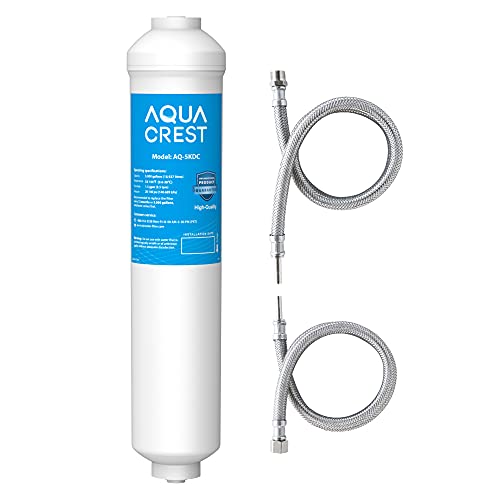 | High-Capacity Pick | Certification: NSF/ANSI | Filter Life Capacity: 5,000 gallons | Connection Size: 3/8-inch | VIEW LATEST PRICE | Read Our Analysis |
| Aqua-Pure AP717 Inline Refrigerator Water Filter |  | Refrigerator Specialist | Certification: NSF 42 | Filter Life Capacity: 1,500 gallons | Connection Size: 1/4 NPT | VIEW LATEST PRICE | Read Our Analysis |
| Watts Premier Inline Water Filter (20,000 Gallon) | 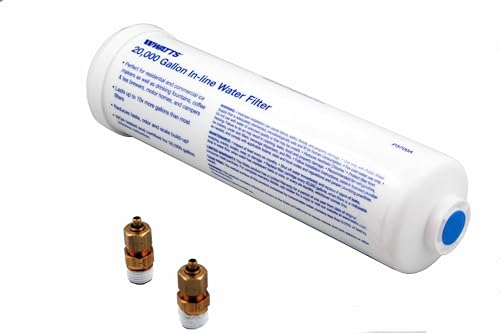 | Longest-Lasting Filter | Certification: WQA, NSF | Filter Life Capacity: 20,000 gallons | Connection Size: 1/4-inch | VIEW LATEST PRICE | Read Our Analysis |
| NOVETE Under Sink Water Filter with NSF Certification |  | Certified Performer | Certification: NSF/ANSI 42, 372 | Filter Life Capacity: 30,000 gallons | Connection Size: 1/4-inch | VIEW LATEST PRICE | Read Our Analysis |
| Hydro Master In-Line Post Carbon Filter |  | Universal Replacement | Certification: ANSI/NSF | Filter Life Capacity: Not specified | Connection Size: 1/4-inch NPT | VIEW LATEST PRICE | Read Our Analysis |
| CuZn Under Sink Water Filter for Faucet |  | Long-Term Value | Certification: NSF/ANSI 42, 372 | Filter Life Capacity: 50,000 gallons | Connection Size: Not specified | VIEW LATEST PRICE | Read Our Analysis |
| SpiroPure Inline Sediment Water Filter (1 Pack) |  | Sediment Specialist | Certification: NSF | Filter Life Capacity: Not specified | Connection Size: 1/4 QC | VIEW LATEST PRICE | Read Our Analysis |
More Details on Our Top Picks
AQUA CREST Under Sink Water Filter System
Tired of buying bottled water just to avoid that chlorine taste from your tap? The AQUA CREST system tackles that exact problem. Its NSF-certified filter uses activated carbon and KDF to strip out chlorine, bad tastes, odors, and contaminants like PFAS and heavy metals. You’ll get a fast 1.5 GPM flow, filling a cup in about three seconds. Obviously, it won’t lower your water’s mineral content or TDS.
Now, installation’s a real highlight. You can connect it directly to your cold water line in roughly three minutes without any drilling. It includes all the hoses and fittings you’ll need. This one’s for you if you want cleaner-tasting water for drinking and cooking without a complex setup. Just remember, you’ll swap the 5,000-gallon filter once a year. That’s a simple trade for getting off the bottle habit.
- Certification:NSF/ANSI
- Filter Life Capacity:5,000 gallons
- Connection Size:3/8-inch
- Contaminants Reduced:Chlorine, metals, VOCs, etc.
- Primary Application:Under sink
- Filter Media:Activated carbon, KDF
- Additional Feature:3-minute installation time
- Additional Feature:Includes stainless steel hoses
- Additional Feature:No drilling required
Aqua-Pure AP717 Inline Refrigerator Water Filter
If your fridge doesn’t have a built-in filter, you’re stuck with tap water’s taste and gunk. Here’s the thing: the Aqua-Pure AP717 solves that. It’s an inline filter you install directly on your water line.
This one’s for you if your refrigerator or ice maker lacks filtration. It tackles chlorine taste, odor, and sediment for 1,500 gallons. Obviously, you’ll swap it every six months. Its simple design means no mess during changes.
You get NSF certification for chlorine reduction. Now, it’s lab-tested for scale, not NSF certified for that. Just install it and enjoy cleaner water and ice.
- Certification:NSF 42
- Filter Life Capacity:1,500 gallons
- Connection Size:1/4 NPT
- Contaminants Reduced:Chlorine, sediment, scale
- Primary Application:Refrigerator/ice maker
- Filter Media:Activated carbon
- Additional Feature:Sanitary change-out design
- Additional Feature:Progressive porosity media
- Additional Feature:0.5 gpm flow rate
Watts Premier Inline Water Filter (20,000 Gallon)
You need a filter that doesn’t quit. The Watts Premier delivers with a massive 20,000-gallon capacity, certified for five years. It’s obviously not for a small fridge alone; it’s for your whole system. It uses KDF technology, which tackles chlorine and inhibits bacterial growth, a real plus for taste and long-term scale prevention.
All right, here’s the thing. It connects easily with 1/4-inch lines, making it perfect for fountains, coffee makers, or RVs. This one’s for you if you want a central filter for multiple outlets and hate changing cartridges often. Go with Watts for serious, lasting filtration.
- Certification:WQA, NSF
- Filter Life Capacity:20,000 gallons
- Connection Size:1/4-inch
- Contaminants Reduced:Chlorine, sediment, scale
- Primary Application:Refrigerator/ice maker
- Filter Media:KDF
- Additional Feature:Bacteriostatic properties guaranteed
- Additional Feature:5-year service life
- Additional Feature:130 years industry experience
NOVETE Under Sink Water Filter with NSF Certification
Worried about what’s really in your tap water? The NOVETE Under Sink filter tackles that fear with serious credentials. It’s independently SGS-tested and meets two key NSF standards, meaning it reliably removes over 99.5% of chlorine and is certified lead-free.
Here’s the thing. Its 6-stage system cuts PFAS, heavy metals, and bad tastes while keeping beneficial minerals. You’ll get a solid 1.27 GPM flow, filling a cup fast. Obviously, it doesn’t reduce TDS, so if your water’s very hard, you’ll need a softener first.
This one’s for you if you prioritize certified, long-term protection under your sink. You install it once, then just forget it for three years. Consider it a set-and-forget health upgrade.
- Certification:NSF/ANSI 42, 372
- Filter Life Capacity:30,000 gallons
- Connection Size:1/4-inch
- Contaminants Reduced:Chlorine, lead, PFAS, etc.
- Primary Application:Under sink
- Filter Media:Activated carbon, polypropylene
- Additional Feature:Leak-proof container design
- Additional Feature:6-stage inline filtration
- Additional Feature:99.5% chlorine removal
Hydro Master In-Line Post Carbon Filter
Need a straightforward filter that fits nearly any fridge or ice maker? All right, the Hydro Master is your universal spare. Its 10-inch body connects via simple 1/4-inch threads, and the included brass and plastic adapters mean you’re covered for most brands like Samsung, GE, or Whirlpool. Obviously, it’s certified to ANSI/NSF standards, so you trust the carbon inside is working.
Here’s the thing: this one’s for you if your priority is easy, no-tool installation and broad compatibility over specialized performance. You get a five-piece set for basic impurity reduction in coolers or fountains. Just swap it in when your current filter expires—it’s that simple.
- Certification:ANSI/NSF
- Filter Life Capacity:Not specified
- Connection Size:1/4-inch NPT
- Contaminants Reduced:Impurities
- Primary Application:Ice maker/refrigerator
- Filter Media:Carbon
- Additional Feature:No tools required
- Additional Feature:5 piece set
- Additional Feature:Lead-free brass connectors
CuZn Under Sink Water Filter for Faucet
If you want clean water without replumbing your entire kitchen, inline filters solve that. The CuZn UC-200 hooks directly to your faucet, needing minimal space and zero drilling. All right, its five-year, 50,000-gallon capacity is a monster value. It’s NSF certified to tackle PFAS, lead, and chlorine while improving taste.
Here’s the thing, it doesn’t reduce TDS, so if you hate mineral taste, look elsewhere. Its three-stage media blend purifies without stripping beneficial minerals. This one’s for you if you crave a simple, long-lasting install with serious contaminant reduction. Just connect it and forget it for years.
- Certification:NSF/ANSI 42, 372
- Filter Life Capacity:50,000 gallons
- Connection Size:Not specified
- Contaminants Reduced:Chlorine, lead, PFAS
- Primary Application:Under sink faucet
- Filter Media:KDF-55, carbon
- Additional Feature:5-year filter life
- Additional Feature:Video tutorial included
- Additional Feature:Tankless design
SpiroPure Inline Sediment Water Filter (1 Pack)
The SpiroPure inline filter is a sediment specialist, tackling gritty water from your fridge or ice maker. If sand or rust clouds your glass, this is your straightforward fix.
Now, it’s a single-purpose tool. It won’t touch chemicals or improve taste. Obviously, you’d pair it with another filter for that. Here’s the thing: its compact design and ¼-inch QC fittings make installation simple for DIYers.
This one’s for you if your main frustration is visible particles. It’s a trusted, NSF-certified sediment barrier. Consider this a clear, cost-effective first step toward cleaner water.
- Certification:NSF
- Filter Life Capacity:Not specified
- Connection Size:1/4 QC
- Contaminants Reduced:Sediment
- Primary Application:Inline sediment filter
- Filter Media:Sediment media
- Additional Feature:4.5 star rating
- Additional Feature:Versatile filtration benefits
- Additional Feature:1/4 QC connection
Factors to Consider When Choosing an Inline Water Filter for Drinking Fountains
All right, you’re looking at filters but you’re not sure which specs actually matter for your fountain. You’ve got to check the certification standards for safety and examine filter longevity against your usage, because a high-capacity model wastes money if you’re only serving a few people. Honestly, you’ll also want to confirm the flow rate keeps up with demand and that the connection type matches your plumbing, or you’re buying a headache.
Certification Standards
Since you’re comparing inline filters, obviously certifications tell you what a filter actually does. NSF/ANSI 42 means it tackles chlorine taste and odor, a must for crisp water. NSF 372 is critical for lead safety, confirming materials meet a strict standard.
Here’s the thing, a WQA seal adds trusted verification. Now, bacteriostatic certification means the media fights internal growth. That’s a smart feature for longevity.
All right, this one’s for you if your primary concern is taste and basic contaminant reduction. You’ll rely heavily on Standard 42. Honestly, if lead’s a worry in your building’s pipes, you must insist on that 372 mark. So, check those labels—your choice becomes obvious.
Filter Longevity And Capacity
Because you’re juggling budgets and maintenance schedules, you want a filter that lasts, not one that demands constant attention.
Look for a high gallon capacity rating, which is the total volume it can clean. Obviously, you’ll replace it when you hit that gallon limit or the recommended time frame, whichever comes first. Here’s the thing: your incoming water quality is the real wild card. A filter rated for 50,000 gallons at 300 ppm TDS might clog faster if your water’s worse. That stated longevity is a best-case scenario.
You can find heavy-duty units built for 30,000-plus gallons, perfect for a busy office. This one’s for you if minimizing change-outs is your top priority. Just match the filter’s specs to your actual water conditions for a smarter, longer-lasting choice.
Flow Rate Performance
You’re worried the water will just trickle out, aren’t you? A strong flow is essential. Obviously, you want that cup filled fast.
Here’s the thing: look for a filter rated around 1.5 gallons per minute. That fills a standard cup in about three seconds. Some models specify a max flow, like 1.27 GPM at 60 psi. Now, a low-flow filter around 0.5 GPM works but slows everything down. It’s for you if noise or pressure is a bigger concern than speed.
Installation And Connection Type
Installation looks tricky, but it’s often just choosing between two main connection types.
Here’s the thing: you want it simple and tool-free. That’s where a push-to-connect fitting shines. You just push it onto your standard 1/4-inch water line. It’s done in minutes. This one’s for you if you hate complex plumbing.
Now, maybe you need under-sink space for a leak-proof container. That’s a different install. It requires a feed line to your faucet. Obviously, you’ll need that dedicated cabinet room.
All right, which is best? For most fountains, the direct inline connection is brilliantly straightforward. Just match your line size. So, check your existing setup first—that choice becomes obvious.
Specific Contaminant Reduction
Sure, you want clean water, but you’re wondering which nasty stuff a filter actually removes. First, verify the specific contaminants it targets. Check for real NSF/ANSI certifications, like NSF 53 for lead reduction, so you aren’t just trusting a label.
Now, think about your water’s issues. Got sediment? Look for a low micron rating, like 0.5 μm. If you’re battling scale or heavy metals like copper, find a filter with KDF media, which uses a redox reaction. Here’s the thing. Many great carbon filters don’t reduce Total Dissolved Solids (TDS); for that you’d need reverse osmosis.
Always demand third-party test data. This one’s for you if you need proof, not just promises. Choose based on your water’s specific profile.
Compatibility With Fountains
Picking the right inline filter for your drinking fountain isn’t just about clean water—it’s about not causing a leaky disaster.
First, verify those inlet and outlet sizes. Your fountain’s fittings, often 1/4-inch NPT, need to match. A mismatch means leaks or it won’t connect at all. Now, check the flow rate. Obviously, you don’t want a trickle. Confirm the filter’s gpm rating meets your fountain’s demand.
Here’s the thing with pressure. Confirm its maximum rating exceeds your supply line’s pressure. Otherwise, you risk damage. You also need material certifications like NSF/ANSI 372 for safety.
All right, this one’s for you if your plumbing specs are clear. It makes installation straightforward and secure. Just match the numbers, and you’re set.
Space Requirements And Size
That cramped space under your fountain isn’t just annoying—it’s a critical measurement you can’t ignore. You must check its height, width, and depth.
The filter’s container type decides its footprint. Honestly, a bottle-style needs more room than a sleek tankless design. You’ll also verify connection size—usually 1/4-inch or 3/8-inch—for your plumbing.
Here’s the thing: installation type matters. A direct-connect unit saves space, while an inline model might need extra hose length. Now, review the maximum flow rate, like 1.5 gallons per minute. A higher rate often means a bigger housing.
Pick the compact, tankless style if you’re squeezed for space. Just guarantee its flow rate meets your fountain’s needs.