
You’re tired of constantly topping off your fountain, right? Obviously, evaporation happens, but hauling a hose gets old. Good news: a simple mechanical valve solves this permanently. I’ve sorted through the options so you don’t have to wade through the specs yourself. Let’s match you with the right fit so you can finally stop babysitting the water level and just enjoy the view.
| Pool Pond Spa Water Leveler PVC Auto Fill 3/8″ Float Valve | Most Popular | Valve Type: Float Valve | Primary Intended Use: Pools, Ponds, Spas | Installation/Connection Size: 3/8 inch | VIEW LATEST PRICE | Read Our Analysis | |
| Water Fountain Auto Fill System with Adjustable Float Valve |  | All-In-One Kit | Valve Type: Float Valve | Primary Intended Use: Fountains, Ponds, Bird Baths | Installation/Connection Size: 1/4 inch tubing | VIEW LATEST PRICE | Read Our Analysis |
| Hudson Valve Self-Contained Automatic Water Float Valve |  | Most Durable | Valve Type: Float Valve | Primary Intended Use: Water Tanks, Ponds, Troughs | Installation/Connection Size: 1/2″ FNPT | VIEW LATEST PRICE | Read Our Analysis |
| Little Giant Auto Fill Valve for Water Features | 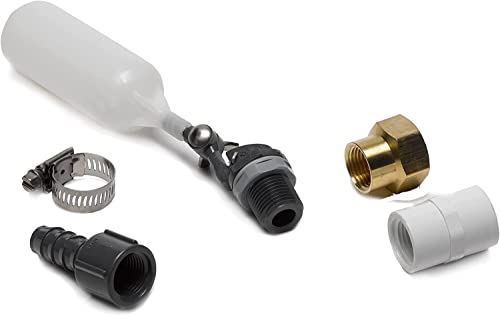 | For Delicate Ecosystems | Valve Type: Float Valve | Primary Intended Use: Water Features, Ponds, Fountains | Installation/Connection Size: 1/2″ MNPT | VIEW LATEST PRICE | Read Our Analysis |
| 2 Pack Automatic Water Dispenser for Pets |  | For Livestock | Valve Type: Float Valve | Primary Intended Use: Livestock Troughs, Waterers | Installation/Connection Size: 1/2 inch | VIEW LATEST PRICE | Read Our Analysis |
| Float Ball Valve for Humidifiers Ponds and Aquariums |  | High-Pressure Pick | Valve Type: Float Ball Valve | Primary Intended Use: Humidifiers, Ponds, Aquariums | Installation/Connection Size: 1 inch NPT | VIEW LATEST PRICE | Read Our Analysis |
| Autofill W/Fluidmaster Valve White |  | Professional Pool Grade | Valve Type: Float Valve | Primary Intended Use: Pools, Spas | Installation/Connection Size: 3/4 inch Fluidmaster | VIEW LATEST PRICE | Read Our Analysis |
More Details on Our Top Picks
Pool Pond Spa Water Leveler PVC Auto Fill 3/8″ Float Valve
Struggling to keep your pool, pond, or spa consistently full? This PVC auto-fill with its 3/8″ float valve is your simplest fix. It’s a tiny, lightweight unit you install yourself. Obviously, you connect it to a water source. Now, here’s the thing: it’s strictly for basic level maintenance. This one’s for you if your feature has a standard inlet and you just hate manual topping off. It won’t handle complex flow rates or high pressure. All right, you’ve seen hundreds of reviews—people buy it because it works. Just grab it and stop worrying about water levels.
- Valve Type:Float Valve
- Primary Intended Use:Pools, Ponds, Spas
- Installation/Connection Size:3/8 inch
- Adjustment Mechanism:Float valve
- Key Construction Material:PVC
- Item Weight:2.89 ounces
- Additional Feature:Warranty information available
- Additional Feature:858 customer reviews
- Additional Feature:Best Sellers Rank listed
Water Fountain Auto Fill System with Adjustable Float Valve
Tired of constantly refilling your fountain all season? This auto fill system solves that with a simple adjustable float valve. It automatically maintains your water level, so you never worry about a dry pump or messy manual top-offs.
Now, the kit’s corrosion-resistant and includes everything: a PE float valve, stainless base, tubing, and connectors. You’ll follow the instructions and use plumber’s tape for a leak-free install. Adjust the float arm up or down to set your perfect water level.
This one’s for you if your fountain, birdbath, or small pond needs hands-free care. It’s a straightforward, set-it-and-forget-it solution for consistent water.
- Valve Type:Float Valve
- Primary Intended Use:Fountains, Ponds, Bird Baths
- Installation/Connection Size:1/4 inch tubing
- Adjustment Mechanism:Adjustable float arm
- Key Construction Material:PE, Stainless Steel
- Item Weight:1.7 pounds
- Additional Feature:10-foot tubing included
- Additional Feature:Multiple mounting accessories
- Additional Feature:PE float valve material
Hudson Valve Self-Contained Automatic Water Float Valve
If you need an indestructible float valve that shrugs off freezing temps and constant use, the self-contained Hudson Valve is your most durable option. It’s a solid ABS plastic block with zero exterior moving parts. Here’s the thing: this valve closes using your own water pressure, not a float ball.
Obviously, you lose some flow adjustability with its fixed design. This one’s for you if you’re filling a tough stock tank or a large pond up to 2,400 GPH and need a “set it and forget it” workhorse. Its compact 5×4 inch body installs directly into 1/2″ plumbing or a garden hose. You get a truly reliable, rust-proof shut-off for heavy-duty applications.
- Valve Type:Float Valve
- Primary Intended Use:Water Tanks, Ponds, Troughs
- Installation/Connection Size:1/2″ FNPT
- Adjustment Mechanism:Self-contained, no arm
- Key Construction Material:ABS plastic
- Item Weight:8 ounces
- Additional Feature:No exterior moving parts
- Additional Feature:High 2400 GPH flow
- Additional Feature:Freeze-resistant and anti-siphon
Little Giant Auto Fill Valve for Water Features
Topping off water features? It’s a tedious chore. You lose water to splashing and evaporation. The Little Giant Auto Fill Valve automates this perfectly for smaller ponds, fountains, or skimmers.
You get multiple adapters for 1/2-inch pipe, tubing, or a garden hose. Installation is straightforward. It fills at a gentle 1.5 gallons per minute. This slow flow won’t shock your ecosystem. Obviously, you adjust the water level with a simple wing nut.
This one’s for you if your priority is a simple, reliable top-off for a modest water feature. Just connect it and forget it.
- Valve Type:Float Valve
- Primary Intended Use:Water Features, Ponds, Fountains
- Installation/Connection Size:1/2″ MNPT
- Adjustment Mechanism:Wing nut adjustment
- Key Construction Material:Not specified
- Item Weight:6.4 ounces
- Additional Feature:Three adapters included
- Additional Feature:1.5 GPM flow rate
- Additional Feature:Healthy ecosystem benefit
2 Pack Automatic Water Dispenser for Pets
You want a set-and-forget water supply for livestock like cattle or horses, plus the dogs. All right, this two-pack of float valves is your gravity-fed solution.
It uses stainless steel floats for automatic shut-off. Now, you’ll save water and constant refilling trips. Here’s the thing: it’s purely mechanical, needing no power. Obviously, you must have a pressurized water line. This one’s for you if your troughs need simple, durable level control. Just verify your pipe thread matches. You get reliable, hands-off watering. That’s the obvious smart choice for your mixed animals. Go ahead and install them.
- Valve Type:Float Valve
- Primary Intended Use:Livestock Troughs, Waterers
- Installation/Connection Size:1/2 inch
- Adjustment Mechanism:180-degree adjustable arm
- Key Construction Material:304 Stainless Steel
- Item Weight:0.11 kilograms
- Additional Feature:Two-pack quantity
- Additional Feature:Saves 30% water
- Additional Feature:Adjustable 180-degree arm
Float Ball Valve for Humidifiers Ponds and Aquariums
Constantly adjusting water levels wastes your time. A float ball valve automates that chore. It’s a simple mechanical solution, using a buoyant ball to shut off water flow at your preset level.
This one’s for you if you need reliability across ponds, troughs, or large aquariums. Its 1-inch NPT thread and ABS construction handle pressure and resist corrosion. Obviously, you’ll need compatible plumbing. The adjustable arm offers installation flexibility, but it’s a right-angle valve, so plan your space.
You get set-and-forget operation, meeting NSF standards. Now, decide if this simple, durable automatic fill solves your specific water-level hassle.
- Valve Type:Float Ball Valve
- Primary Intended Use:Humidifiers, Ponds, Aquariums
- Installation/Connection Size:1 inch NPT
- Adjustment Mechanism:Adjustable arm
- Key Construction Material:ABS
- Item Weight:0.01 kilograms
- Additional Feature:NSF/ANSI 61 certified
- Additional Feature:High-pressure sealing (1.0MPa)
- Additional Feature:Minimal splash design
Autofill W/Fluidmaster Valve White
Worried about fluctuating water levels damaging your pool or spa? The Pentair T40FW Autofill solves that. It’s a straightforward float valve, so you won’t mess with electronics. It automatically maintains your level, protecting equipment from running dry and preventing overflow that wastes water.
Now, this one’s for you if you have a standard or vanishing edge pool and prefer mechanical reliability. Its ¾-inch Fluidmaster threads connect directly to your system. Obviously, you’re getting a simple white unit measuring about 18 inches tall.
All right, it’s purely mechanical, which is perfect for many. Just verify your setup matches its threaded ports. If that fits, installing this unit makes maintaining your water level effortless and smart.
- Valve Type:Float Valve
- Primary Intended Use:Pools, Spas
- Installation/Connection Size:3/4 inch Fluidmaster
- Adjustment Mechanism:Float valve
- Key Construction Material:Not specified
- Item Weight:4.4 pounds
- Additional Feature:For vanishing edge pools
- Additional Feature:Prevents landscape damage
- Additional Feature:4.0-star customer rating
Factors to Consider When Choosing an Auto Fill Valve for a Fountain
Choosing the right auto fill valve can feel tricky, but you’ve got some key factors to weigh. You’ll want to match your fountain’s specific size and setup scope with the valve’s application, checking its float mechanics for reliable shut-off. Don’t forget to evaluate the adjustability for water level control, the construction materials for durability, and whether the flow rate suits your fountain’s volume needs.
Application And Setup Scope
Alright, let’s get your fountain’s water level sorted once and for all.
First, measure your reservoir’s capacity and available space. You need a valve that physically fits and has a compatible flow rate. Next, check your water supply line’s connection. Mismatched threads mean a trip to the hardware store.
Here’s the thing: adjustability is key. Can the float achieve your precise water height? Some valves offer a wide range; others don’t. Obviously, material matters for outdoor use. Brass or stainless steel withstands elements better than plastic.
This one’s for you if your setup is straightforward. Just confirm the specs match your fountain’s reality. Now, make a shortlist of valves that meet these basic needs. That simplifies your final choice immensely.
Float System Mechanics
Because you’re ready to stop babysitting your fountain’s water level, understanding the float system is key. This mechanism directly controls your water inlet. Obviously, it uses buoyancy.
A sealed float ball rises with the water, actuating a seal to shut off the flow. Now, the common design involves an external arm. You’ll often adjust your level by bending this arm. Its sealing effectiveness must withstand your line pressure—some handle over 140 PSI without a leak.
Here’s the thing: some advanced systems ditch the external arm entirely. They use water pressure and an internal buoyant component in a compact housing. All right, so which is for you? If you need simple, visible adjustment, go traditional. For a cleaner, protected look, choose the internal style. That’s your core choice made.
Adjustability And Control Range
You might be tired of fussing with that float arm every week, but you don’t want to lock yourself into a rigid, unchangeable water level.
Now, your control range starts with that arm. You can often bend or slide it in its bracket to set a basic high and low. For finer control, look for a valve with a wing nut or screw. That gives you about an inch of precise adjustment from a fixed point. Here’s the thing: every valve has a physical limit where it shuts off.
Obviously, the standard range might not suit a deep basin. This one’s for you if you need flexibility: get a model that accepts a longer float extension arm. A six-inch add-on can dramatically increase your operational water level.
Prioritize a secure, accessible mechanism. You’ll thank yourself when you need to tweak the level later without a major overhaul. Choose based on your fountain’s depth needs, not just the first valve you see.
Construction Materials Quality
Once you’ve got the water level dialed in, what it’s all made of keeps it working. You don’t want rust fouling your feature. So you need corrosion resistance; stainless steel bases and bodies are obviously excellent here.
Now, plastics like ABS or PE are common for the valve itself. They’re lightweight and won’t corrode, but you must check the pressure rating. That’s a real trade-off. A valve rated for 140 PSI can handle a powerful pump, but you might pay a bit more.
Here’s the thing: the seals and moving parts endure constant wear. This one’s for you if you prioritize longevity and want to avoid leaks. Make sure those components promise superior sealing. Choosing durable materials now means effortless operation later.
Flow Rate And Volume
Choosing your fountain’s auto fill valve means matching its flow, measured in gallons per minute (GPM), to your actual water loss. You’re fighting evaporation, right? A valve’s maximum flow can range from under 2 to over 40 GPM, and you’ve got to get it right. Obviously, a tiny valve can’t keep up with a big, sun-blasted basin. It’ll just leave your pump gasping. But here’s the thing: go too high, and you’re creating new problems. That powerful 40 GPM unit on a small tabletop fountain? It’ll cause turbulence and overwhelm everything. You need to balance the inlet connection size—like 1/2″ for volume—with your feature’s real thirst. This one’s for you if you honestly assess your daily water loss. Get this match right, and your fountain just hums.
Physical Size Constraints
All right, besides water flow, the actual size of the auto fill valve body matters just as much. You’ve got a tight equipment box or a shallow basin to work with. That bulky valve you love just won’t fit.
Now, measure your available space before you shop. Obviously, a compact float valve suits cramped setups best. Its smaller profile tucks away easily.
Here’s the thing: some valves need more vertical clearance for the float arm to swing freely. You’ll regret not checking that. This one’s for you if your sump is shallow. Just account for the plumbing connections, too—they add bulk.
Long-Term Reliability Factors
Since you’re investing in a fountain that’ll last, you shouldn’t gamble on a valve that quits after one season.
Check the build materials first. You want stainless steel or rust-resistant plastics like ABS. These shrug off corrosion for years.
Verify the pressure rating. It must exceed your system’s operating pressure to avoid a blowout. Here’s the thing: a 145 PSI rating offers a solid safety margin.
Look for minimal moving parts outside. Fewer external pieces mean fewer points for wear and mechanical failure.
Obviously, a robust seal is non-negotiable. Guarantee it’s rated for high pressure, like 1.0 MPa, to prevent annoying, wasteful leaks.
Finally, seek out standards compliance. Valves meeting NSF or ANSI standards have passed durability tests. Choosing one with these factors makes your decision easy and smart.